

The Story Behind the Proclamation
History of the Family Proclamation
Discover the story behind The Family: A Proclamation to the World—the challenges facing the world, the inspired work of prophets and apostles, and how God prepared the way for this prophetic declaration.
Era I · 1905–1990
A century of watchmen
Long before 1995, prophets were teaching the doctrines of the family proclamation.
Early 1900s
Apostolic warnings about the family begin to build
From the first years of the twentieth century, apostles warn with growing frequency of things that would lead to the disintegration of the family as the fundamental unit of society.
Read moreClose
As early as April 1905, Elder Hyrum M. Smith warned in general conference against forces that would lead to "the disintegration of that family, and the scattering of its members." He was not alone, and the theme did not fade. In 1922 — and again forty-four years later — President David O. McKay taught that the home is "the fundamental unit of society." In 1947, Elder Stephen L Richards spoke of the tragic evils visible in the domestic life of his day and the disintegration of family life.
The pattern matters more than any single sermon: decades before the world's arguments about the family took their modern shape, the consistent voice from the pulpit was that the family is where society stands or falls. What changed over the century was not the Church's message — it was how urgently the world needed to hear it.

Sources
- Hyrum M. Smith, in Conference Report, April 1905, 47
- David O. McKay, in Conference Report, October 1922, 78; Conference Report, April 1966, 107
- Stephen L Richards, in Conference Report, April 1947, 90
- Byran B. Korth, "Seership and World Conferences," Religious Educator 24, no. 2 (2023)
1915
The First Presidency establishes home evening
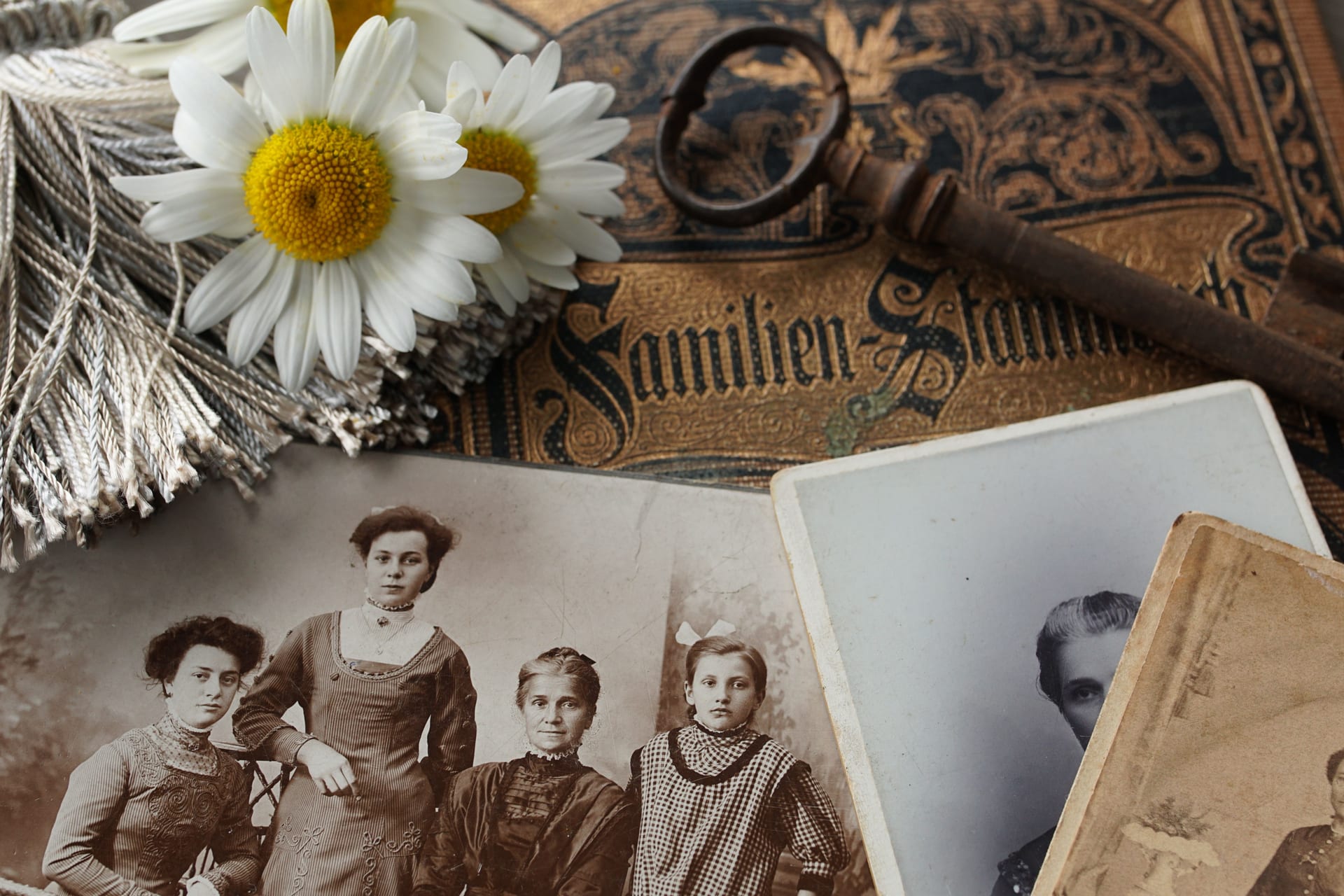
President Joseph F. Smith's First Presidency asks families to set aside an evening at home together — prophetic direction that puts the family at the center of Church life.
Read moreClose
This came as counsel from the First Presidency to the whole Church, with a promise attached: great blessings would result for the families who obeyed.
Home evening made the Church's teaching about the family concrete. The home — not the meetinghouse — was declared the first place where faith is taught, and parents the first teachers. Every later step in this timeline, including the proclamation itself, builds on that foundation: when the Church says the family is central, it asks its members to live accordingly, one evening at a time.
Sources
- First Presidency, in Improvement Era, June 1915, 734
- Byran B. Korth, "Seership and World Conferences," Religious Educator 24, no. 2 (2023)
December 10, 1948
The nations agree: the family is fundamental
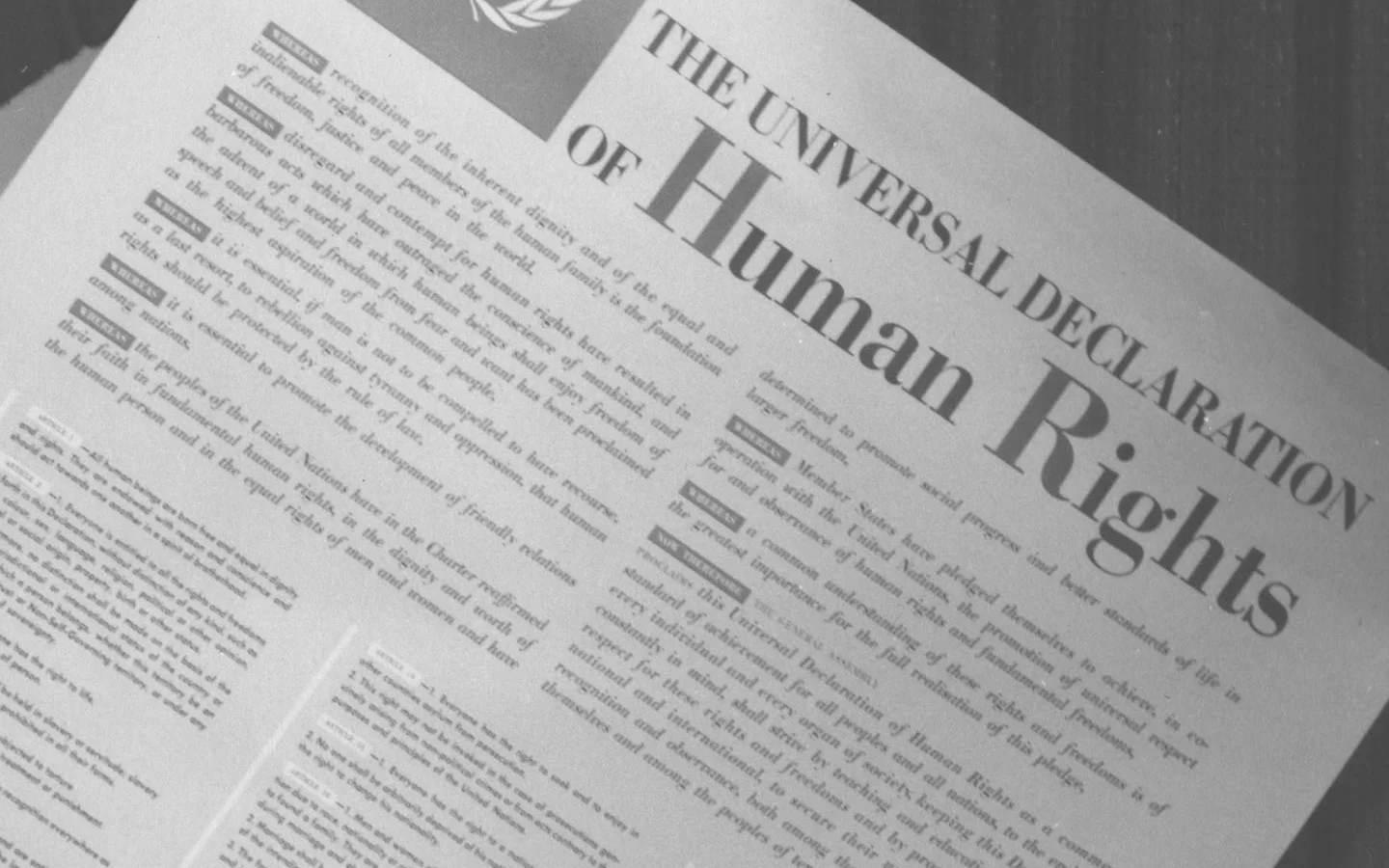
The UN's Universal Declaration of Human Rights declares that "the family is the natural and fundamental group unit of society and is entitled to protection by society and the State."
Read moreClose
After the Second World War, the community of nations wrote down what it believed civilization required. Article 16 of the Universal Declaration of Human Rights included this: "The family is the natural and fundamental group unit of society and is entitled to protection by society and the State."
Hold on to that sentence. In 1948 it was uncontroversial — prophets and parliaments said nearly the same thing. Nearly fifty years later, the proclamation would close by calling on "responsible citizens and officers of government everywhere to promote those measures designed to maintain and strengthen the family as the fundamental unit of society" — an echo of language the world itself once affirmed. The rest of this timeline the story of how the world drifted from its own declaration, but the teachings of Jesus Christ and His prophets remained steadfast.
1966
The family moves to the front rank of Church teaching
President Hugh B. Brown declares marriage, family, and home "among the most important subjects of our whole theological doctrine."
Read moreClose
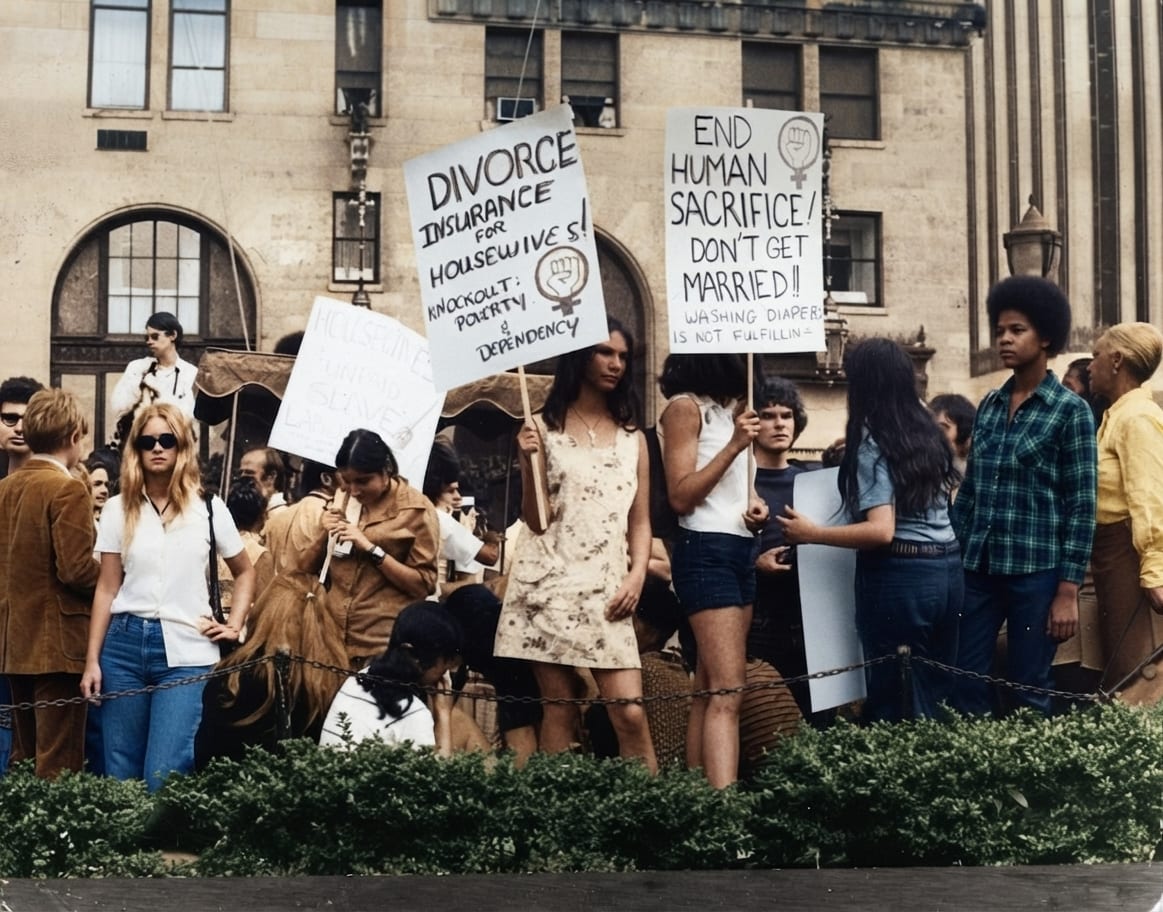
By the mid-1960s — as the sexual revolution gathered and divorce rates began their long climb, President Hugh B. Brown of the First Presidency testified, "Marriage, the family, and the home are among the most important subjects of our whole theological doctrine . . . as the family is the basic and fundamental unit of the Church and of society, its preservation and its righteous needs should take precedence over all other interests."
That same October 1966 conference, President N. Eldon Tanner addressed the disintegration of the family directly. Scholars find that references to the family roughly doubled in general conference from the 1960s to the 1970s.
Sources
- Hugh B. Brown, in Conference Report, October 1966, 101, 104
- N. Eldon Tanner, in Conference Report, October 1966, 46, 49
- W. Justin Dyer and Michael A. Goodman, "The Prophetic Nature of the Family Proclamation," in Latter-day Saints in Washington, D.C. (RSC, 2015)
1970
Monday nights belong to the family
The Church designates Monday evening, Church-wide, for family home evening .
Read moreClose
In 1970 the Church did something institutionally remarkable: it cleared every Monday night of Church activities, worldwide, so that nothing the Church itself sponsored could compete with families gathering at home.

Sources
- Spencer W. Kimball, in Ensign, November 1976, 7
- W. Justin Dyer and Michael A. Goodman, "The Prophetic Nature of the Family Proclamation," in Latter-day Saints in Washington, D.C. (RSC, 2015)
April 6, 1980
A proclamation fifteen years early
At the Church's 150th anniversary, President Kimball has Gordon B. Hinckley read a proclamation that already declares "the sanctity of the family as a divine creation."
Read moreClose
Proclamations are rare. Before 1980 the Church had issued only four — in 1841, 1845 (twice), and 1865 — each reserved for what the First Presidency and Quorum of the Twelve most wanted on the record before the world. For the sesquicentennial, President Spencer W. Kimball directed a fifth, and Elder Gordon B. Hinckley read it from the Fayette, New York, cabin where the Church was organized.
It declared: "We affirm the sanctity of the family as a divine creation and declare that God our Eternal Father will hold parents accountable to rear their children in light and truth." And further: "We teach that the most sacred of all relationships, those family associations of husbands and wives and parents and children, may be continued eternally when marriage is solemnized under the authority of the holy priesthood."
That same October, President Kimball explained the obligation behind such documents: "From the beginning, The Church of Jesus Christ of Latter-day Saints has emphasized family life. We have always understood that the foundations of the family, as an eternal unit, were laid even before this earth was created! Society without basic family life is without foundation and will disintegrate into nothingness. . . . Therefore, whenever anything so basic as the eternal family is imperiled, we have a solemn obligation to speak out, lest there be critical damage to the family institution by those who seem to be deliberately destructive of it."
Fifteen years before 1995, the footings for the family proclamation were already created.
Sources
- "Proclamation," general conference, April 1980
- Spencer W. Kimball, in Ensign, November 1980, 4
- "How rare a proclamation from church leaders is," Church News, November 6, 1999
Era II · 1990–1994
An Era of Change
In four years, the postwar consensus about the family came apart in courtrooms and conference halls — and the prophet and apostles were on the forefront of watching and testifying.
November 14, 1991
The First Presidency reaffirms "Standards of Morality and Fidelity"
A First Presidency letter to the whole Church restates its teachings on chastity, marriage, and sexual morality.
Read moreClose
Read throughout the Church, the letter reaffirmed that intimacy is reserved for a man and a woman as husband and wife, and restated the standard of fidelity within marriage. It was one of several formal statements in the early 1990s in which the First Presidency put the Church's teachings about marriage on the record — years before any proclamation was drafted.
These statements are worth knowing about because the proclamation, when it came, was largely a consolidation: most of its sentences restate and reaffirm what the First Presidency had already said, scattered across letters and conference addresses, in one signed document.
Sources
- First Presidency letter, "Standards of Morality and Fidelity," November 14, 1991
January 1994
The Church embraces the International Year of the Family
The First Presidency formally endorses the UN's International Year of the Family.
Read moreClose
When the United Nations declared 1994 the International Year of the Family, the First Presidency endorsed the observance and encouraged members to take part. The Church's instinct toward the international family conversation was to join it — to stand with the nations wherever they still stood by their own 1948 declaration.
That makes what happened over the following eighteen months more striking. It was at the United Nations Cairo conference in September, and the events that followed, where the world watched the definition of the family being quietly rewritten. Prophets and apostles counselled together and came to the decision that The Church of Jesus Christ of Latter-day Saints would need to state its own position-to the world.
February 1, 1994
The First Presidency: marriage is "ordained of God"
A formal First Presidency statement to reaffirm unchanging doctrine.
Read moreClose
The statement declared that "marriage between a man and a woman is ordained of God" and announced the Church's doctrine which cannot change to support society's legalization of same-gender marriage. It was issued to the worldwide Church from the First Presidency, more than a year and a half before the proclamation was read.
What the proclamation added in 1995 was not a new position but a comprehensive doctrinal frame: the eternal identity of men and women, the purposes of family life, the responsibilities of parents, and the warning to the world, gathered into one signed declaration.
Sources
- First Presidency statement, February 1, 1994
April 1994
Elder Maxwell warns of a redefined family
In general conference, Elder Neal A. Maxwell cautions about redefining the family.
Read moreClose
Speaking months before any drafting began, Elder Maxwell surveyed the social science and the politics in the current cultural landscape. He observed the world was beginning to regard the family as an institution to be redefined, and that public policies were increasingly built to weaken the family.
Elder Maxwell would shortly be appointed to the three-man committee that wrote the proclamation's first drafts. His April 1994 warning is a window into what Christ's apostles were studying as they wrote it.
May 1994
"Like a ship without a rudder"
President Boyd K. Packer, in public: the world is drifting from the family values that anchored it, prying apart the safeguards of the past.
Read moreClose
"Like a ship without a rudder, without a compass, we drift from the family values which have anchored us in the past. World leaders and court judges agree that the family must endure if we are to survive. At the same time, they use the words freedom and choice as tools to pry apart the safeguards of the past and loosen up the laws on marriage, abortion, and gender. In so doing, they promote the very things which threaten the family." — Boyd K. Packer, May 1994
What the apostles later said they "could see coming," they were saying out loud, in real time, before a single word of the proclamation was drafted. Within months, President Packer himself would set its writing in motion.
May–June 1994
President Benson dies; Howard W. Hunter leads the Church
Ezra Taft Benson passes on May 30; on June 5, Howard W. Hunter becomes President of the Church with Gordon B. Hinckley and Thomas S. Monson as counselors.
Read moreClose
President Hunter's brief administration — it would last just nine months — coincided almost exactly with the proclamation's creation. It was to his First Presidency that the finished draft would be submitted the following January, and under his leadership that the Twelve's fall 1994 deliberations went forward.
In his first general conference as President, in October 1994, he emphasized the calling of prophets and apostles as those with authority to preserve and protect the family as the foundation of society.
September 1994
Cairo and Beijing
At the UN population conference in Cairo, as well as another conference in Beijing, world leaders as well as Church observers note that the negotiations on the family never mention marriage and it was being removed from the international stage.
Read moreClose
The International Conference on Population and Development met in Cairo at the height of the International Year of the Family. Church representatives attended and reported back; President Packer, who read the documents from the conference proceedings, later made the observation that stuck: "The word marriage was not mentioned."
For apostles of Jesus Christ, the omission was clarifying. The argument had moved: it was no longer about whether the family mattered, but about what a family is — and the institutions writing the world's consensus documents were answering that question by subtraction. Within weeks of Cairo, the Quorum of the Twelve took up the question of issuing a proclamation.
One note on the record, President Packer's 2003 retelling loosely reversed the order of the UN conferences, placing Beijing before Cairo. The contemporaneous record fixes Cairo in September 1994, with the Beijing women's conference following in September 1995 — after the proclamation was written and approved.
Fall 1994
In the temple: "We had better proclaim our position"
At the urging of Acting President Boyd K. Packer, the Quorum of the Twelve spends a day in their Salt Lake Temple council room on one subject — the family — and decides to prepare a proclamation.
Read moreClose
The Twelve reviewed doctrine and policy, and discussed what they saw coming. In Elder Russell M. Nelson's words: "We could see the efforts of various communities to do away with all standards and limitations on sexual activity. We saw the confusion of genders. We could see it all coming."
There was also a date on the calendar concentrating minds. A United Nations Year of the Family event had been announced for Salt Lake City itself. President Packer, speaking at BYU in 1998: "When it was announced that a United Nations Year of the Family Conference would be held in Salt Lake City, with delegates coming from abroad, the Brethren decided to declare our position in a proclamation: 'The Family: A Proclamation to the World.'"
Out of these councils, a drafting committee was appointed: Elders James E. Faust, Neal A. Maxwell, and Russell M. Nelson — with Elder Dallin H. Oaks later replacing Elder Maxwell. Elder Faust, senior of the three, suggested each write his own draft independently and then bring them together. The decision to write, the men assigned, and the reasons why are all on the record — in the apostles' own words and in the biographies written from their papers.
Sources
- Sheri Dew, Insights from a Prophet's Life — Russell M. Nelson (Deseret Book, 2019)
- Richard E. Turley Jr., In the Hands of the Lord — The Life of Dallin H. Oaks (Deseret Book, 2021)
- Boyd K. Packer, BYU School of Family Life dedication, September 10, 1998; quoted in Korth, Religious Educator 24, no. 2 (2023)
- "Events That Led to the Creation of 'The Family: A Proclamation to the World,'" Church Newsroom
Christmas 1994
Three drafts become one
Working through the holidays, the committee — Elder Nelson as principal draftsman — completes the draft; every member of the Twelve reviews and revises it.
Read moreClose
Each committee member wrote independently; the drafts were merged; and the combined text went to every member of the Twelve for review and revision. Elder Nelson served as principal draftsman. Elder Oaks later described the spirit of the work: "Prayerfully we continually pleaded with the Lord for His inspiration on what we should say and how we should say it. We all learned 'line upon line, precept upon precept,' as the Lord has promised."
President Packer, in a 1998 interview, was direct about authorship: "In council, we thought we must declare ourselves. . . . And so the members of the Twelve wrote that proclamation. It was considered word by word by the First Presidency and the Quorum of the Twelve."
Era III · January–September 1995
Already written
In January 1995, the finished proclamation waited months for a prophet to choose its moment.
January 9, 1995
The finished draft goes to the First Presidency
Three days later, the completed proclamation draft is submitted to Presidents Hunter, Hinckley, and Monson — and "warmly received."
Read moreClose
The family proclamation was initiated in the fall of 1994, drafted over the Christmas holidays, more than eight months before it was read publicly.
Its first appearance in any legal filing came in April 1997, nineteen months after the Tabernacle. The First Presidency, meanwhile, took the January text under advisement and refined it over the following months.
March 1995
President Hunter dies; President Hinckley leads the Church
Howard W. Hunter passes on March 3 after nine months as President; on March 12, Gordon B. Hinckley is set apart — and around this transition, the proclamation receives the approval of the First Presidency and the Twelve.
Read moreClose
The proclamation was carried across a change of prophets. The combined First Presidency and Quorum of the Twelve gave the document its approval around this transition. By spring 1995 the text was finished, approved, and in the new prophet's hands.
April 1995
The prophet says not yet
Senior apostles encourage President Hinckley to read the finished proclamation at April general conference.
Read moreClose
President Hinckley, president for barely three weeks, felt it was too early in his presidency for a major declaration, and he set the finished document aside. It waited six months.
What the delay shows is that the decision actually lived with the prophet — waiting until, in his judgment, the moment was right.
September 4–15, 1995
Beijing rewrites the language of womanhood and family
The UN Fourth World Conference on Women meets in Beijing; participants sympathetic to the family report it was redefining marriage and unsupportive of motherhood.
Read moreClose
The largest UN conference to that date convened in Beijing to set a global platform on women's issues. Observers aligned with the Church — and many other people of faith, including the Vatican — came away troubled by what the platform emphasized and what it omitted: marriage and motherhood appeared chiefly as obstacles, and the "natural and fundamental group unit" of 1948 was nowhere to be found in the document's vision of the future.
Eight days after the conference closed, the proclamation was read in Salt Lake City. The two documents make an instructive pair: the world's statement about women written without the family, and the Church's statement about the family in which fathers and mothers stand "as equal partners" before God.
September 20, 1995
"Let's let that concern overwhelm the meeting"
Three days before the general Relief Society meeting, President Hinckley meets the Relief Society presidency, reveals that a proclamation exists — then asks for their advice.
Read moreClose
The Relief Society presidency — Elaine L. Jack, Chieko N. Okazaki, and Aileen H. Clyde — had independently planned their September meeting around the family. In a meeting arranged through Elder Robert D. Hales, President Hinckley worried aloud: ". . . you've already asked me to speak and I've prepared remarks and they'll take about eleven minutes. . . . I'm afraid it would overwhelm the meeting." The sisters' answer: "let's let that concern overwhelm the meeting if that would be the case."
September 23, 1995
"To warn and forewarn"
In the Salt Lake Tabernacle, President Hinckley reads "The Family: A Proclamation to the World" — introducing it with his own statement of why.
Read moreClose
"With so much of sophistry that is passed off as truth, with so much of deception concerning standards and values, with so much of allurement and enticement to take on the slow stain of the world, we have felt to warn and forewarn. In furtherance of this we of the First Presidency and Council of the Twelve Apostles now issue a proclamation to the Church and to the world as a declaration and reaffirmation of standards, doctrines, and practices relative to the family." — President Gordon B. Hinckley
Six hundred nine words, about eleven minutes. Afterward, in the hall, Elder Oaks told the Relief Society presidency: "Do you understand that you have just been in an historic moment? . . . I have never seen a prophet make a decision in a meeting like that, about something we have spent a year with. . . . I think he made the decision to read that proclamation dependent on your response."
Most members received it as a restatement of the obvious, as President Nelson's biographer records. In 1995, that a family is built on the marriage of a man and a woman, and that gender is an eternal part of identity, were hardly contested claims. The proclamation was not written for the world of 1995. It was written for today.
Sources
- Gordon B. Hinckley, "Stand Strong against the Wiles of the World," Ensign, November 1995
- The Family — A Proclamation to the World
- Gardner and Osguthorpe, "Delivering the Family Proclamation," Religious Educator 24, no. 2 (2023)
- Sheri Dew, Insights from a Prophet's Life (Deseret Book, 2019)
- "A Proclamation: 'To the Church and to the World,'" Deseret News, September 30, 1995
Era IV · 1996–2015
The world continues at pace
Ten years later, the proclamation on the family is shown to be prophetic.
October 2005
Ten years on, a conference address takes stock
Elder M. Russell Ballard devotes a general conference talk to the proclamation's first decade.
Read moreClose
Elder Ballard, who had participated in the drafting through the council system, used the tenth anniversary to restate the proclamation's warnings and promises for a Church that was beginning to need them more than it had in 1995. Two years earlier he had described the work itself: the Twelve, troubled by what they saw as they traveled the world, crafting through the Church's council system a declaration that would make the Lord's position on the family unmistakable.
August 2009
The proclamation goes to the World Congress of Families
Elder Russell M. Nelson — its principal draftsman — presents the proclamation's principles to an international, interfaith audience in Amsterdam.
Read moreClose
Addressing the World Congress of Families V, Elder Nelson laid out the proclamation's teachings for delegates of many faiths, framing the family as "the hope for the future of nations." The document written for the Church and "to the world" was increasingly doing its second job: over the years its authors gave copies to government leaders and international bodies, and its language began appearing wherever the case for the family needed making.
Sources
- Russell M. Nelson, "The Family: The Hope for the Future of Nations," World Congress of Families V, Amsterdam, August 2009; full text in Church News, August 12, 2009
November 2014
The proclamation at the Vatican
President Henry B. Eyring carries the proclamation's vision to an interfaith colloquium on marriage convened by Pope Francis.
Read moreClose
Speaking at the Vatican's Humanum colloquium — a gathering of religious leaders from fourteen faith traditions — President Eyring bore witness of marriage as the union of a man and a woman, drawing on the proclamation and his own marriage, and looked forward to a "renaissance of happy marriages." A document once received as a restatement of the obvious was now the Church's contribution to a worldwide interfaith defense of the family.
June 26, 2015
A turning point in America
The U.S. Supreme Court legalizes same-sex marriage nationwide, completing the arc that the Twelve apostles discussed in their 1994 temple council.
Read moreClose
Twenty-one years after the apostles' council concluded "we could see it all coming." The questions the proclamation answered in 1995 — what marriage is, what gender means, what families are for and even though the world has changed and departed from Christ's teachings on marriage and the family, the proclamation still stands.
Era V · 2015–present
A standard for a generation
What read as obvious in 1995 now reads as a declaration — which is what it was called all along.
October 2015
"Your name is right here"
Ronald A. Rasband is called to the Twelve — and taught that the proclamation now carries his name too.
Read moreClose
Elder Rasband later recounted the counsel he received at his call: "This proclamation is now yours. Your name is right here. Feel it and teach it like you own it." The proclamation bears no signatures; it is issued in the name of the councils of the First Presidency and Quorum of the Twelve. Each apostle called since 1995 steps into that ownership — which is why the document has not faded with its original authors, but has been taught, cited, and defended by every apostle called in the thirty years since.
April 2017
The proclamation at the United Nations
Jean B. Bingham, Relief Society General President, draws on the proclamation's principles at a UN gathering in New York.
Read moreClose
Speaking at a United Nations event on family policy, Sister Bingham carried the proclamation's teachings to the institution whose 1994 Year of the Family had helped prompt its writing — a fitting return. The Relief Society, whose 1995 presidency had been in the room when a prophet chose the moment to read it, was now presenting its principles on the world's largest stage.
October 2017
President Oaks tells the story
Twenty-two years on, President Oaks gives the most detailed public account of the drafting — and frames the proclamation as this generation's test.
Read moreClose
"Subjects were identified and discussed by members of the Quorum of the Twelve for nearly a year. Language was proposed, reviewed, and revised. . . . It was a surprise to some who thought the doctrinal truths about marriage and the family were well understood without restatement. Nevertheless, we felt the confirmation and we went to work."
He closed by quoting President Ezra Taft Benson — "every generation has its tests and its chance to stand and prove itself" — and added his own witness: "I believe our attitude toward and use of the family proclamation is one of those tests for this generation."
May 2018
An apostle presents the family proclamation to a national legislature
Elder Jeffrey R. Holland shares the proclamation with members of Argentina's Congress.
Read moreClose
Meeting with Argentine legislators in Buenos Aires, Elder Holland presented the proclamation as the Church's statement on the institution their laws were then debating. Conference pulpit, courtroom, congress, colloquium — by its third decade the proclamation had been carried into every kind of forum where the family's future was being decided, exactly as a document addressed "to the world" was meant to be.
April 2020
The draftsman, now prophet, issues the next proclamation
President Russell M. Nelson — the 1995 document's principal draftsman — reads a bicentennial proclamation on the Restoration, the Church's seventh.
Read moreClose
Twenty-five years after serving as the family proclamation's principal draftsman, President Nelson stood as President of the Church and read a new proclamation marking two hundred years since the First Vision. The moment closed a circle: the apostle who had pleaded for inspiration "line upon line" over a family declaration now held the office that decides when the Church speaks to the world — and the rare instrument of a proclamation was used again, underscoring how deliberately such documents are made.
September 23, 2025
Thirty years — "words from God"
On the exact anniversary, Elder Rasband marks thirty years at BYU; BYU Religious Education convenes a conference on the proclamation; weeks later he tells the Church that "The Family: A Proclamation to the World" is indeed, doctrine.
Read moreClose
Thirty years after The Family: A Proclamation to the World was first presented, Church leaders continue to affirm its enduring doctrinal foundation. In October 2025, Elder Ronald A. Rasband declared:
"The proclamation on the family is, as President Hinckley stated, doctrine, my dear brothers and sisters."
That same conviction had been expressed three years earlier by President Dallin H. Oaks, who taught:
"We affirm that the family proclamation, founded on irrevocable doctrine, defines the kind of family relationships where the most important part of our eternal development can occur."
Together, these teachings reaffirm that The Family: A Proclamation to the World is more than a response to the issues of its day. It remains a clear declaration of Heavenly Father's eternal doctrine of the family and continues to guide His children in this life and throughout eternity.
Sources
- Ronald A. Rasband, "The Family Is Ordained of God," BYU devotional, September 23, 2025
- Ronald A. Rasband, "The Family Proclamation—Words from God," general conference, October 2025
- Dallin H. Oaks, "Divine Love in the Father's Plan," general conference, April 2022
- Y Religion podcast, ep. 110: "The Divine Origin of the Family Proclamation" (Byran B. Korth)
In Their Own Words
How the Proclamation came about, from the apostles who drafted it.
President Russell M. Nelson:
“One day in 1994, the Quorum of the Twelve Apostles spent a day in their council room in the Salt Lake Temple discussing issues surrounding the family. They considered everything from the increasingly ubiquitous nature of pornography to potential anti-family legislation of various kinds. This was not a new discussion, but that day the entire agenda revolved around this one vital topic.”
“The Twelve reviewed both doctrine and policies, considering those things that could not be changed—doctrine—and those things that possibly could be—policies. They discussed issues they saw coming, including an intensified societal push for gay marriage and transgender rights. ‘But that was not the end of what we saw,’ Elder Nelson explained. ‘We could see the efforts of various communities to do away with all standards and limitations on sexual activity. We saw the confusion of genders. We could see it all coming.’
“This extended discussion, along with others over a period of time, led to the conclusion that the Twelve should prepare a document, perhaps even a proclamation, outlining the Church’s stand on the family to present to the First Presidency for consideration.” Source: Sheri Dew in Insights from a Prophet’s Life: Russell M. Nelson (2019), 208.
President Dallin H. Oaks:
“As one of only seven of those Apostles still living, I feel obliged to share what led to the family proclamation for the information of all who consider it. The inspiration identifying the need for a proclamation on the family came to the leadership of the Church over 23 years ago. It was a surprise to some who thought the doctrinal truths about marriage and the family were well understood without restatement. Nevertheless, we felt the confirmation and we went to work. Subjects were identified and discussed by members of the Quorum of the Twelve for nearly a year. Language was proposed, reviewed, and revised. Prayerfully we continually pleaded with the Lord for His inspiration on what we should say and how we should say it. We all learned “line upon line, precept upon precept,” as the Lord has promised (D&C 98:12).”
“During this revelatory process, a proposed text was presented to the First Presidency, who oversee and promulgate Church teachings and doctrine. After the Presidency made further changes, the proclamation on the family was announced by the President of the Church, Gordon B. Hinckley.” (Link)
Elder M. Russell Ballard:
“As a member of the Quorum of the Twelve Apostles, I participated in the process of drafting that inspired document. It was a remarkable experience for all of us. As we travel the world, we see things–both within the Church and outside the Church. We were troubled by much of what we were seeing. We could see the people of the world wanting to define the family in ways contrary to God’s eternal plan for the happiness of His children. Various world conferences were held dealing either directly or indirectly with the family. Major agenda items were introduced by some delegates that would have greatly weakened the family; yet, through the significant contributions of Church leaders, members, and other like-minded people, the language and thus the effects of those proposals were softened.”
“In the midst of all that was stirring on this subject in the world, the First Presidency and the Quorum of the Twelve Apostles could see the importance of declaring to the world the revealed, true role of the family in the eternal plan of God. We worked together through the divinely inspired council system that operates even at the highest levels of the Church to craft a proclamation that would make the Lord’s position on the family so clear that it could not be misunderstood.” (Link)
President Boyd K. Packer:
“The First Presidency and Quorum of the Twelve issued a proclamation on the family. I can tell you how that came about. They had a world conference on the family sponsored by the United Nations in Beijing, China. We sent representatives. It was not pleasant what they heard. They called another one in Cairo. Some of our people were there. I read the proceedings of that. The word marriage was not mentioned. It was at a conference on the family, but marriage was not even mentioned. It was then they announced that they were going to have such a conference here in Salt Lake City. Some of us made the recommendation: “They are coming here. We had better proclaim our position.” (Link)
He later added:
“In 1995 that great document “The Family: A Proclamation to the World” was prepared by all members of the First Presidency and Quorum of the Twelve Apostles. … The hope is that Latter-day Saints will recognize the transcendent importance of the family.” (Link)
Saints, Volume 4: The Story Behind the Family Proclamation
In 2024, The Church of Jesus Christ of Latter-day Saints published the fourth and final volume of its acclaimed series, Saints, Volume 4:Sounded in Every Ear. Spanning 1955–2020, this volume weaves together hundreds of true stories from every corner of the world, revealing how the Lord guided His Church through a rapidly changing era.
Among its most compelling threads is the story of The Family: A Proclamation to the World. Rather than appearing in a single chapter, the Proclamation unfolds across the book through the experiences of prophets and apostles, world events, conversations with government leaders, and the faith of ordinary disciples.
As you explore these chapters, you'll discover more than the history of a document, you'll encounter the people, prayers, and providential moments that surrounded it. Together, these stories reveal how God prepared His prophets to speak with clarity and love, and how the Proclamation has touched lives across nations, cultures, and generations.
Continue Exploring
Explore these books, articles, primary documents, and thoughtful perspectives to deepen your understanding and continue your study.
Firsthand accounts
- Dallin H. Oaks, "The Plan and the Proclamation" — general conference, October 2017
- Gordon B. Hinckley, "Stand Strong against the Wiles of the World" — Ensign, November 1995
- Sheri Dew, "Insights from a Prophet's Life — Russell M. Nelson" (Deseret Book, 2019), chapter on the proclamation
- Richard E. Turley Jr., "In the Hands of the Lord — The Life of Dallin H. Oaks" (Deseret Book, 2021)
- Boyd K. Packer, BYU devotional, February 2, 2003
- M. Russell Ballard, "The Sacred Responsibilities of Parenthood" — BYU Education Week, August 19, 2003
Scholarship & aggregations
- Byran B. Korth, "Seership and World Conferences" — Religious Educator 24:2 (2023)
- Barbara Morgan Gardner & Lolly Osguthorpe, "Delivering the Family Proclamation" — Religious Educator 24:2 (2023)
- W. Justin Dyer & Michael A. Goodman, "The Family Proclamation — The Secular and Spiritual Context" — Religious Educator 24:2 (2023)
- Dyer & Goodman, "The Prophetic Nature of the Family Proclamation" — in Latter-day Saints in Washington, D.C. (RSC, 2015)
- mormonr, "The Family Proclamation" — primary-document Q&A
- "Events That Led to the Creation of 'The Family: A Proclamation to the World'" — Church Newsroom
Listen
- Y Religion ep. 110: "The Divine Origin of the Family Proclamation" (Byran Korth)
- Y Religion ep. 115: "A Woman's Influence on the Delivery of The Family Proclamation"
- Y Religion ep. 121: "The Family Proclamation in Context" (Michael Goodman)
- Church History Matters ep. 92: "A Deep Dive on the Family Proclamation"
The critical account
- Gregory A. Prince, research excerpts for "Gay Rights and the Mormon Church" — §09, Proclamation on the Family (University of Virginia)The strongest published version of the lawyer-authorship claim — which its own author qualifies: "I have not seen any proof of this story."